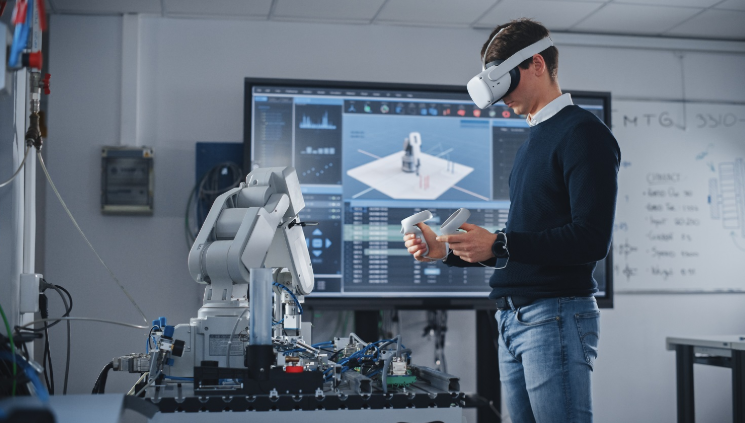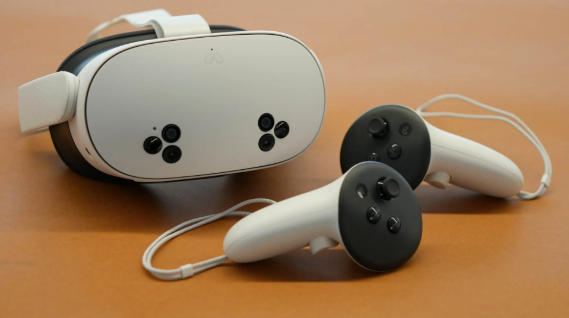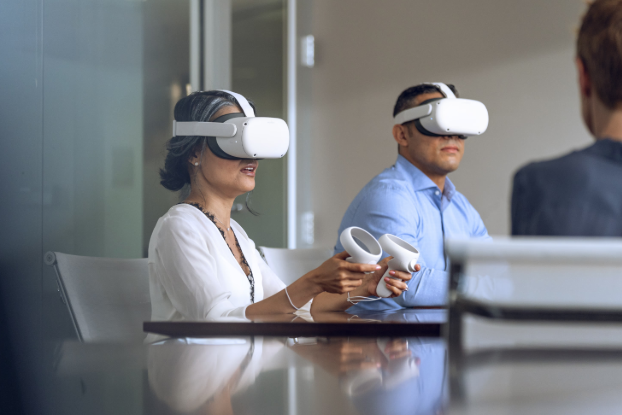
The integration of Virtual Reality in training and simulation is reshaping skills acquisition across diverse sectors. By immersing trainees in lifelike scenarios, VR fosters enhanced engagement and knowledge retention. This technology allows professionals to hone critical skills safely, mitigating the risks of real-world practice. However, the implications of this shift extend beyond immediate training outcomes, raising questions about future applications and effectiveness. What might the next evolution of VR training look like?
How VR Transforms Training Across Industries
As organizations increasingly prioritize effective training methods, virtual reality (VR) emerges as a transformative tool that offers immersive experiences tailored to specific industry needs.
By simulating real-world scenarios, VR facilitates skill enhancement in a safe environment, allowing individuals to practice and refine their abilities without the constraints of traditional training methods.
This innovative approach fosters greater engagement and promotes a deeper understanding of complex tasks across various sectors.
Key Benefits of Using VR in Simulation Exercises
While traditional training methods often struggle to replicate the complexities of real-world scenarios, virtual reality (VR) provides a dynamic alternative that enhances simulation exercises.
By offering immersive learning experiences, VR engages participants more deeply, fostering retention and understanding.
Additionally, it creates a risk-free environment where learners can practice critical skills without real-world consequences, ultimately promoting confidence and competence in high-stakes situations.
Real-World Examples of VR Training Applications
The effectiveness of VR in training is exemplified across various sectors, showcasing its versatility and impact on skill development.
In healthcare simulations, professionals practice procedures in realistic settings, enhancing patient care without risk.
Meanwhile, military exercises utilize VR to replicate combat scenarios, fostering strategic thinking and teamwork.
These applications illustrate VR’s transformative potential in training, paving the way for more immersive learning experiences.
See also: Virtual Reality Technology in Modern Gaming
Future Trends in VR for Training and Development
With advancements in technology driving innovation, the future of VR in training and development is poised for significant transformation.
Emerging trends indicate a shift towards immersive learning environments that enhance participant engagement and retention.
Additionally, sophisticated skills assessment tools will enable trainers to evaluate competencies in real-time, fostering personalized development paths and ultimately empowering learners to embrace their growth with greater freedom and confidence.
Conclusion
In summary, VR’s transformative technology tantalizes training paradigms, propelling professionals toward proficiency with precision and passion. By bridging the gap between theoretical knowledge and practical application, it cultivates confidence and competence in high-stakes environments. As industries increasingly embrace this innovative approach, the potential for personalized, progressive learning experiences expands exponentially. Ultimately, the future of training and simulation is not just virtual but vibrantly vital, promising to redefine skill acquisition in profound and powerful ways.